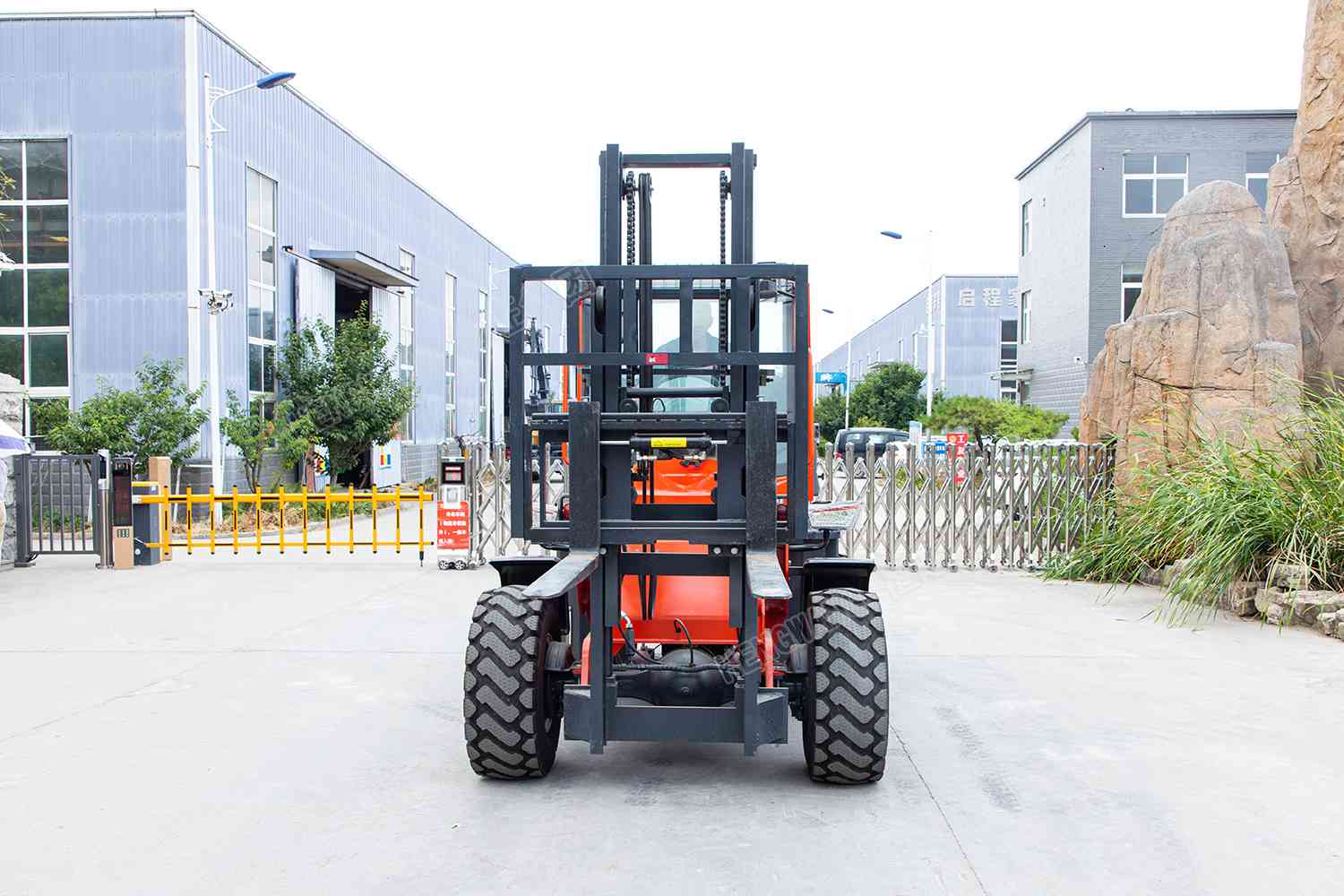
Forklift side-shifting forks and adjustable forks are two different types of attachments designed to adjust fork positioning for different load requirements. However, they differ significantly in function, structure, and application scenarios.
1. Side-Shifting Fork
Function:
Allows the forks to move horizontally left or right (usually via hydraulic or electric power) without needing to reposition the entire forklift.Structural Features:
The forks are mounted on a sliding mechanism that moves laterally via a hydraulic cylinder or motor.
Typical shifting range: 50-150mm (varies by model).
Key Advantages:
Precise alignment: Quickly adjusts fork position to match pallet openings, especially useful in tight spaces or high-level racking.
Improved efficiency: Reduces the need for repeated forklift repositioning, lowering operational difficulty.
Common Applications:
Warehouse racking systems, container loading/unloading, production line material handling.
2. Adjustable Fork
Function:
Adjusts the distance between the two forks (mechanically or hydraulically) to accommodate different pallet widths or loads.Structural Features:
Each fork is independently mounted on a movable carriage, adjusted via chains, gears, or hydraulic cylinders.
Wider adjustment range, typically 200-1200mm (or more).
Key Advantages:
Versatility: Compatible with various pallet sizes (e.g., Euro, US standard, or non-standard loads).
No manual repositioning: Eliminates the need for manual fork spacing adjustments.
Common Applications:
Mixed pallet environments, logistics centers, large-scale warehousing.
Selection Advice
Side-shifting forks: Ideal for high-precision tasks requiring frequent fine-tuning (e.g., high-level racking, automated warehouses).
Adjustable forks: Best for general use with varying pallet sizes, especially in logistics with inconsistent pallet standards.
Combined options: Some advanced attachments integrate both functions, though at a higher cost.